Peace Begins With Me: Two Mindfulness Practices to Ground Your Child
Introduction:
The school corridor was a place of fear for me as a child.
Bullying. Backpack grabbing. A constant hum of anxiety that I carried in my chest from first bell to last.
I felt unsafe there. And nowhere in my education did anyone offer me tools to regulate those fears, to soothe that worry, to find ground beneath my feet.
It's a loss I still feel.
Fast forward twenty years. I'm walking down the hall of my daughter's elementary school, and I hear something that stops me in my tracks:
Children singing. "Miiiiiiiindfulness."
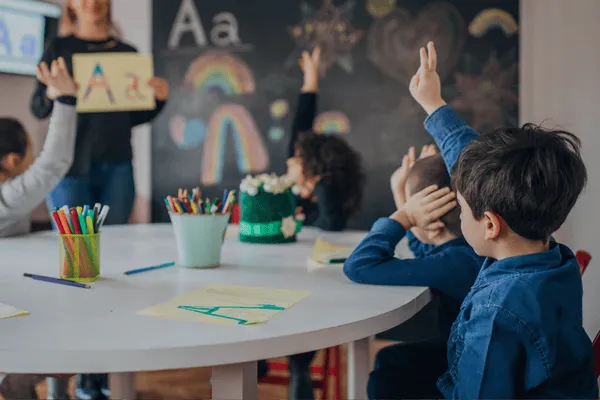
Bright faces. Excited smiles. This is the reaction I get when I arrive on Mondays to teach mindfulness to these students.
And I think: What a gift. What a transformation. What a different childhood this could be.
The Power of the Present Moment
The world is waking up to something essential: Presence heals.
We're seeing the research connect screen time to anxiety, and we're watching our children's nervous systems calm when we put the devices down and simply be with them. [1]
We're noticing how they light up when we meet them in the here and now, when we're not distracted, not planning the next thing, but fully present with them.
This isn't just about kids. If you're navigating divorce, rebuilding your life, or moving through any season of stress and transition, these practices are for you too.
Because here's the truth: We can't give our children what we don't have ourselves.
If we want them to be grounded, we need to practice grounding. If we want them to know how to self-soothe, we need to learn it first. If we want them to trust their own capacity to find calm in the chaos, we have to model it.
So today, I'm sharing two simple, powerful mindfulness exercises. Teach them to your children. Practice them yourself. Use them when emotions feel too big, when your mind won't stop spinning, when you need to return to your body and remember: I am here. I am safe. I have what I need.
1. Peace Begins With Me: A Mantra for Grounding

Photo by Sergey Chayko
This practice uses a simple mantra combined with bilateral movement: touching fingertips. This activate both hemispheres of the brain and bring you into the present moment.
When to use this:
When things feel chaotic or overwhelming (at school, at home, before a difficult conversation)
At the beginning of the day to set a grounded tone
After a triggering moment or transition
When emotions feel too big to hold
How to practice:
Sit comfortably. Take a breath.
As you say each word of the phrase "Peace begins with me," touch your thumb to each fingertip in turn on both hands:
Peace – Touch thumbs to pointer fingers
Begins – Touch thumbs to middle fingers
With – Touch thumbs to ring fingers
Me – Touch thumbs to pinkies
Repeat this sequence 10 times (or more if needed).
Start by saying the words out loud. Then whisper them. Finally, let them become silent—just a rhythm in your mind, paired with the gentle touch of your fingers.
Why this works:
The repetition creates focus. The physical touch grounds you in your body. The bilateral stimulation (using both hands) helps regulate the nervous system.[2]
And the phrase itself? It's a powerful reminder: You have agency. Peace isn't something you wait for or hope someone else will give you. It begins inside you.
I've shared this practice with teachers, and they use it at the start of the school day or during transitions. It brings children (and adults) back to center. It reminds us that we have the power to shift our own state.
2. The Five Senses Practice: Returning to the Body

Photo by Luis Quintero
This is one of the most effective grounding techniques I know. It interrupts rumination, pulls you out of your head, and anchors you in the present moment through your senses.
When to use this:
When you're feeling distracted or scattered
When anxious thoughts are spiraling
Before a stressful meeting or conversation
Any time you need to calm your nervous system quickly
How to practice:
Pause wherever you are. Take a breath.
Slowly move through each of your five senses, noticing what you're experiencing without judgment:
I am seeing _________ (the light coming through the window, my child's backpack on the floor)
I am hearing _________ (traffic outside, the hum of the refrigerator, my own breathing)
I am feeling _________ (the chair beneath me, the coolness of the air, tension in my shoulders)
I am smelling _________ (coffee, fresh air, nothing in particular)
I am tasting _________ (the lingering flavor of tea, the dryness in my mouth)
The key is to simply label what's happening—not to judge it, analyze it, or make a story out of it.
Not: "That noise is so annoying."
But: "I hear a tapping sound."
This subtle shift moves you from reaction to observation. From resistance to acceptance. From fight-or-flight to presence.
You can do this silently in your head, whisper it to yourself, or write it down in a journal. However you practice it, your awareness will shift from distracted to focused, from overwhelmed to grounded.
Why this works:
When we're anxious or stressed, we're often lost in our thoughts. We either replay the past or catastrophize about the future. Our bodies are here, but our minds are somewhere else entirely.
This practice brings you back. It reminds your nervous system: I am safe in this moment. I am here. I am present.
These Practices Are for You, Too
If you're a parent reading this, I want you to know: You don't have to be perfect at mindfulness to teach it. You don't have to meditate for an hour every morning or have some zen-like calm mastered.
You just have to be willing to practice. To try. To notice when you're dysregulated and offer yourself—and your child—a tool to come back.
And if you're navigating divorce or any major life transition, these practices aren't just nice additions to your self-care routine. They're essential.
They're how you stay grounded when the lawyer emails make your heart race. They're how you regulate before walking into mediation. They're how you calm yourself after a hard conversation with your ex so you can show up present for your kids.
They're how you remind yourself, over and over: Peace begins with me. I have the power to return to calm.
A Different Kind of Education
School doesn't have to be a place of fear and overwhelm, especially not for our children and not for us as we navigate the challenges of this season.
There will be hard days. There will be moments when emotions feel unmanageable, when the weight of everything is too much.
But the more tools we have, the more practiced we are at returning to our bodies, our breath, our capacity for presence, then the more resilient we become.
If you're reading this, one thing is for sure: You're already showing up. You're already choosing yourself and your healing.
Keep going. Keep practicing. Keep coming back to this moment, right here.
Peace begins with you.
References:
[1] Twenge, J. M., Joiner, T. E., Rogers, M. L., & Martin, G. N. (2018). Increases in depressive symptoms, suicide-related outcomes, and suicide rates among U.S. adolescents after 2010 and links to increased new media screen time. Clinical Psychological Science, 6(1), 3-17. https://doi.org/10.1177/2167702617723376
[2] Shapiro, F. (2018). Eye Movement Desensitization and Reprocessing (EMDR) Therapy: Basic Principles, Protocols, and Procedures (3rd ed.). Guilford Press.