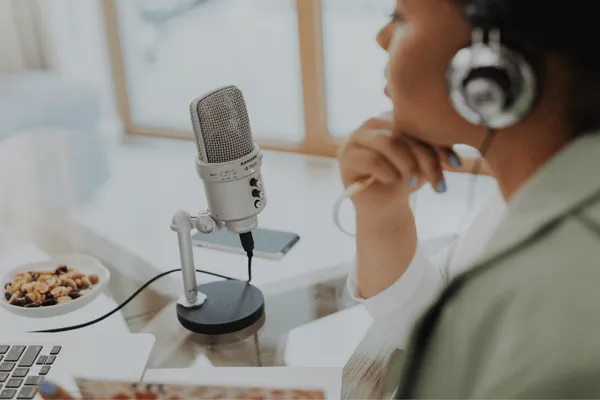
To Podcast or Not? A Guide for Therapists and Coaches
If you're a therapist or coach building your practice, you've probably wondered: Should I start a podcast?
You see other professionals in your field hosting shows. You hear about the power of podcasting for growing a business. But you're also busy with other things: seeing clients, managing paperwork, trying to stay visible online. Adding another thing to your plate feels overwhelming.
So the question becomes: Is podcasting actually worth it for your therapy or coaching practice?
The short answer: It can be. But not for everyone, and not in every season.
Let's explore what podcasting offers therapists and coaches, what it demands, and how to decide if it's the right move for you.
The Rise of Podcasting: Why Now?
Podcasting began in 2004 when Adam Curry and Dave Winer created a way to distribute digital audio recordings over the internet. But it didn't truly explode until the past few years.
Today, there are over 2 million podcasts available worldwide. [1] And while that number might sound saturating, here's the reality: Most podcasts don't make it past 10 episodes. If you're willing to show up consistently and offer genuine value, there's absolutely room for your voice.
For therapists and coaches specifically, podcasting offers something unique: the ability to build trust and connection at scale.
Your potential clients get to hear your voice, your approach, your values, before they ever book a session. They get to experience what it might feel like to work with you. And that kind of intimacy? It's hard to replicate through social media posts or website copy alone.
Why Therapists and Coaches Should Consider Podcasting
1. It Builds Know, Like, and Trust
In the mental health and coaching world, people don't just hire based on credentials. They hire based on connection. They want to know: Does this person understand me? Can I trust them with my story?
Podcasting allows potential clients to spend 20, 30, 40 minutes with you. They can hear how you think, how you hold space, how you approach complex topics. That's powerful.
2. It Positions You as an Expert
When you consistently share valuable insights on topics like divorce recovery, anxiety management, life transitions, or personal growth, you establish yourself as a thought leader in your niche.
This doesn't mean you have to have all the answers. It means you're willing to explore important questions, share what you've learned, and guide others through their own journeys.
For coaches and therapists starting a podcast, this visibility can lead to:
Speaking opportunities
Media features
Collaboration requests
Referrals from colleagues
A steady stream of ideal clients who already resonate with your approach
3. It Drives Traffic to Your Website and Services
Every podcast episode is an opportunity to invite listeners into deeper connection with your work.
You can:
Direct them to resources on your website
Share links to your services or programs
Offer free guides or assessments
Invite them to join your email list or support groups
When done authentically (not salesy), this creates a natural pathway from listener to client.
As of 2024, podcast listeners are highly engaged—80% of podcast listeners consume most or all of each episode they start. [2] That means your audience is truly paying attention, not just scrolling past.
4. It's Cost-Effective Marketing
Compared to paid ads, podcast marketing for therapists and coaches is relatively low-cost.
Initial investment:
A decent microphone ($50-$200)
Recording/editing software (free options available like Audacity or GarageBand)
Podcast hosting platform ($10-$30/month)
Ongoing costs:
Your time (the biggest investment)
Occasional editing help if needed
You don't need fancy equipment or a production team to start. You need a clear message, consistency, and the willingness to show up.
Promoting your podcast can happen largely through your existing channels, such as your email list, social media, and website.
5. It Creates Evergreen Content
Unlike social media posts that disappear into the algorithm, podcast episodes live on.
Someone can discover your show years from now and binge your entire back catalog. Each episode continues working for you long after you hit publish.
6. It Fosters Genuine Connection
For many therapists and coaches, the heart of the work is relationship. Podcasting extends that relational capacity beyond your office or Zoom room.
Listeners often reach out to share how an episode resonated, how it helped them through a hard moment, how it gave them permission to seek support.
These connections, even if they don't become clients, remind you why you do this work in the first place.
The Reality Check: What Podcasting Demands
Before you rush to buy a microphone, let's be honest about what podcasting actually requires.
Time and Consistency
Starting a podcast for therapists and coaches isn't a one-and-done project. It requires:
Planning episodes and topics
Recording (and re-recording when needed)
Editing audio
Writing show notes and descriptions
Promoting each episode
Responding to listener questions or feedback
If you're already stretched thin, adding podcasting might create more stress than it's worth (at least right now).
Ask yourself: Can I realistically commit to releasing episodes on a regular schedule? Weekly? Biweekly? Monthly?
Consistency matters more than frequency. It's better to release one quality episode per month than to start weekly and burn out after six episodes.
Comfort with Vulnerability
Podcasting requires you to share your voice—literally and figuratively. For some therapists and coaches, this feels natural. For others, it's deeply uncomfortable.
You'll be putting yourself out there. Not everyone will resonate. Some might criticize. That's part of the territory.
Ask yourself: Am I ready to be visible in this way? Can I handle feedback (both positive and negative) with grace?
Technical Learning Curve
While podcasting doesn't require a degree in audio engineering, there is a learning curve:
Recording quality audio
Basic editing
Uploading to hosting platforms
Optimizing for discoverability
Understanding analytics
You can absolutely learn these skills. But if tech overwhelms you, you might need support.
Patience for Growth
Podcasts rarely explode overnight. Growing an audience takes time, especially in the beginning. You might release 10, 20, even 50 episodes before you see significant traction. That's normal.
Ask yourself: Can I stay committed even if growth is slow?
Is Podcasting Right for Your Practice?
Here's a simple framework to help you decide:
Podcasting might be right for you if:
You love talking about your area of expertise
You want to build a platform beyond one-on-one work
You're willing to commit to consistency (even if it's just monthly)
You enjoy creating content
You're comfortable with visibility and vulnerability
You're in a season where you can dedicate time to this
Podcasting might not be right for you (right now) if:
You're already burned out or overwhelmed
You hate the sound of your own voice (this can shift, but it's real)
You don't have clarity on your niche or message
The tech side feels completely inaccessible and you can't invest in support
You're in a season of deep personal transition and don't have bandwidth
There's no shame in either answer. Podcasting is a tool, not a requirement.
Starting a Podcast: Practical First Steps
If you've decided podcasting is right for you, here's how to begin:
1. Define Your Niche and Audience
Who are you speaking to? What specific challenges do they face? What transformation do you help them achieve? The more specific, the better.
For therapists and coaches, your podcast niche might be:
Divorce recovery for women
Anxiety management for high-achievers
Somatic healing and nervous system regulation
2. Decide on Format and Frequency
Will you:
Host solo episodes sharing insights?
Interview guests (other therapists, coaches, or clients with success stories)?
Answer listener questions?
Mix formats?
And how often will you release episodes? Weekly? Biweekly? Monthly?
Choose whatever feels sustainable.
3. Invest in Basic Equipment
You don't need to spend thousands. Start with:
A USB microphone (Blue Yeti, Audio-Technica ATR2100 are solid beginner options)
Headphones
Free recording software (Audacity, GarageBand)
A quiet recording space
4. Plan Your First 5-10 Episodes
Don't just wing it. Outline topics that align with your expertise and your audience's needs.
This gives you a runway and helps you stay consistent even when inspiration feels low.
5. Learn the Basics (or Get Help)
You can learn podcasting through:
Free YouTube tutorials
Podcasting courses
Hiring a podcast coach or editor
Joining podcasting communities for support
The key is to not let the technical side paralyze you. Start messy. You'll improve as you go.
The Bottom Line: Podcasting as a Path, Not a Pressure
Podcasting can be an incredible tool for therapists and coaches who want to expand their reach, deepen their impact, and connect with ideal clients in a meaningful way.
But it's not the only path. And it's not a requirement for success.
If podcasting feels aligned and if the idea energizes you, then explore it. Start small. Be consistent. Give yourself permission to be imperfect.
And if it doesn't feel right? That's okay too. There are countless ways to grow your practice and serve your people.
What matters most is that you're showing up authentically, in the ways that feel sustainable and true to who you are.
Ready to Start Your Podcast? We Can Help.
If you're a therapist or coach who's ready to launch your own podcast but feeling overwhelmed by where to start, we've created a comprehensive course just for you.
Press Record walks you through:
Defining your niche and ideal listener
Setting up your equipment and software
Recording and editing your first episodes
Launching and promoting your show
This course is designed specifically for mental health professionals and coaches—with real examples, templates, and step-by-step guidance to help you go from idea to launched podcast with confidence.
Click here to learn more and enroll on the waitlist → Podcast Course
You have valuable insights to share. Let's help you get them out into the world.
References
[1] Podcast Insights. (2024). Podcast statistics: How many podcasts are there? https://www.podcastinsights.com/podcast-statistics/
[2] Edison Research. (2024). The infinite dial 2024. https://www.edisonresearch.com/the-infinite-dial-2024/
International Podcast Day. (n.d.). The history of podcasting. https://internationalpodcastday.com/podcasting-history/